Showing posts with label K. Show all posts
// // Leave a Comment

Kudu


The kudu is a sub-species of antelope that is found inhabiting mixed shrub woodland, and savanna plains in eastern and southern Africa. The kudu relies heavily on close, dense thickets in which the kudu can escape to and hide when it feels threatened. There are two species of kudu in Africa which are the Lesser kudu and the Greater kudu. Both kudu species are closely related and look very similar in appearance but there are a few distinctive ways that the lesser kudu and the greater kudu can be distinguished from one another.


Kudus are herbivorous animals and therefore have a completely vegetarian diet. Kudus forage in woodland and around thickets of shrubs nibbling on leaves from the trees and bushes. Kudus also eat other varieties of plant life such as herbs, flowers, berries and fallen fruits. Kudus are prey to a number of predators such as lions, leopards, cheetahs, wild dogs and the occasional large python that will hunt the smaller and more vulnerable kudu young. Kudu are able to run very fast but often have a hard time outrunning predators so the kudu rely on their agile ability to leap into forest and woodland where large carnivorous predators find it harder to chase them. The kudu will then often hide in woodland until the predator have eventually given up and left.


Kudus live in small herds of up to 24 kudu individuals. The kudu herds mainly consist of female kudus and their calves as male kudus tend to solitary and only come together with other kudus when it is time to mate. It has been known that groups of up to 8 male kudus will form a herd but this is very rare. The kudu mating season occurs at the end of the rainy season. The kudu gestation period is around 8 months after which time the female kudu will normally give birth to just one baby kudu. The baby kudus tend to be born around February and March when the grass is at it's highest and there is plenty of food to help the baby kudu calves to grow.


Kudus have both benefited and suffered from contact with humans. Humans find the kudu and easy target for hunting due to the fact that kudus tend to stop and look around after they have run away. Some local tribes people believe the kudu to be a sacred animal and therefore protect the kudu rather than killing it. Human settlements have also meant that the kudu habitat as changed and the kudu have had to move to other areas. This has actually done the kudu population the world of good as the kudu have been pushed into areas where there is a better source of water and therefore food. Source
Read More
// // 5 comments

Komodo Dragon


The komodo dragon also known as the giant monitor lizard, is the largest species of lizard in the world.The komodo dragon inhabits the rainforests of Southeast Asia, and the komodo dragon is native to just a few islands in Indonesia that are part of the Komodo Island National Park. Fossil evidence however, suggests that the komodo dragon once had a much larger habitat but this has been severely decreased due to deforestation. Komodo dragons are completely dominant predators in their environment, and are named by the locals as the land crocodile due to their large size and habit of eating seemingly anything that the komodo dragons can find.


The komodo dragon has an exceptional sense of smell meaning that the komodo dragon is able to hunt out its prey up to 8 km away, when aided by the wind blowing in the right direction. Recent discoveries have revealed that the komodo dragon is indeed venomous, and does not kill its prey through lethal bacteria, as previously thought. However, once the damage the komodo dragon can do coupled with the fact that the saliva of the komodo dragon is known to carry more than 50 different strains of bacteria, means that any animal that manages to survive the attack of a komodo dragon, is extremely likely to die of infection.


The komodo dragon hunts anything that comes into contact with the komodo dragon, including its own eggs! Generally komodo dragons are not known to actively hunt humans, but the komodo dragon is known to be one of the man-eating animals in the world, as it is not uncommon for the komodo dragon to attack and eat humans that get in its way. To hunt their prey, komodo dragons rely heavily on their camouflage in the long grass and great patience as the komodo dragons sit and wait for prospective prey to pass.


Due to the fact that the komodo dragon is an apex predator in its limited environment, the komodo dragon will often live to more than 30 years of age. The main exception to this is the side effects that occur due to deforestation and areas where there is a lack of food for the komodo dragon to hunt. Today there are thought to be around 3,000 komodo dragon individuals left in the wild with less than a third of them being female komodo dragons that are of the age to breed. Source
Read More
// // Leave a Comment

Kiwi


The kiwi is a brown, fuzzy, flightless bird native to the forests and jungles of New Zealand. In recent years the kiwi has become endangered, mainly due to introduced predators like dogs, cats, rats, ferrets and weasels which hunt the kiwi and eat it's eggs. The kiwi is almost helpless against these exotic threats and there are many support organizations for kiwis which run conservation projects to try and protect the remaining kiwi population. The largest of these kiwi conservation projects is run by the Bank of New Zealand.


There are many different species of kiwi, but all of them can only be found inhabiting the forests of New Zealand. It is believed that the incredible diversity of this island nation is due to its early separation from Australia and the rest of the continents, millions of years ago, by way of tectonic plate shifting. The kiwi is the national bird and icon of New Zealand. In fact, the native people of New Zealand are often also called Kiwis. The kiwi also appears on many flags and symbols across the islands.


The eggs of the kiwi weigh about one pound which is 450g. The beak of the kiwi is about the size of one third of the kiwi's body. The kiwi uses it's long beak to rummage through the foliage on the ground in search of food. Kiwis are omnivorous animals and eat a variety of both plants and animals. The kiwi mainly hunts out worms, insects and spiders but also eats fruits and berries, generally those that have fallen to the forest floor.


The kiwi is thought to be related to the ostrich and the emu, making the kiwi the smallest member of this family of birds. Like it's larger cousins, the kiwi is unable to fly due to it's small wing span and large weight. The kiwi therefore spends it's life foraging on the forest floor. Although kiwis are generally solitary animals, kiwis are known to live in pairs for parts of their lives. These kiwi couples mate only with each other and the female kiwi is known to be larger than the male kiwi, meaning the female kiwi is generally the dominant bird. Source
Read More
// // 1 comment

Kingfisher


The kingfisher is a small to medium sized colourful bird generally found close to water.There are nearly 100 different species of the kingfisher bird found around the world. Kingfishers live both in wetlands and woodlands worldwide, feeding mainly on fish but also insects, frogs and crayfish with those kingfisher species that live in the woodlands occasionally eating reptiles, birds and even small mammals.


There are three main types of kingfisher around the globe which are the river kingfishers, the tree kingfishers and the water kingfishers all of which have large heads, long sharp pointed bills, short legs, and stubby tails. The smallest species of kingfisher is the African Dwarf Kingfisher, which gets to an average of 10.4 g in weight and just 10 cm (4 inches) in length. The largest kingfisher species is the Giant Kingfisher, which gets to an average of 355 g (13.5 oz) and grows to 45 cm (18 inches).


Kingfishers nest in tree hollows and holes dug into the ground, which tend to be in river banks or at the sides of lakes. Kingfishers dig small tunnels with their nest at the end, which can range in length depending on the species. The giant kingfisher is known to dig tunnels that are over 8 meters long! Female kingfishers lay up to 10 eggs (although normally less), and both the male and the female kingfishers help to incubate the eggs, which hatch in between 3 and 4 weeks. Kingfishers are well known for their brightly coloured feathers which range in colour from black to red to green.


Due to their generally small size, kingfishers have a number of predators wherever they exist around the world. The main predators of the kingfisher are foxes, raccoons, cats and snakes, but kingfishers are also preyed upon by other small mammals and large birds. The eggs of the kingfisher are also preyed upon by many of the kingfisher's predators. Many species of kingfisher are considered to be threatened species as their numbers have been declining mainly due to habitat loss. These threatened species of kingfisher tend to be the kingfisher species that inhabit woodland and forests as their habitat is being destroyed due to deforestation which occurs in many areas around the world. Source
Read More
// // Leave a Comment

King Penguin


The king penguin is the second largest species of penguin in the world, with adult king penguins growing to nearly a metre in height. There are two recognised sub-species of the king penguin found throughout the sub-Antarctic, with more than 2 million breeding pairs thought to be dotted across the rocky islands (a number which appears to be increasing). The king penguin is found inhabiting the rocky islands in parts of the Antarctic Ocean, with the geographical location being one of the main differences between the two king penguin sub-species. King Penguins breed on the sub-Antarctic islands, at the northern reaches of Antarctica, as well as around the Falkland Islands, and other temperate islands of the region.


The king penguin is one of the most elegant of all penguin species as it's long and slender body helps the king penguin to glide through the water with great ease. The bright-yellow markings on the head and neck of the king penguin are characteristic of this penguin species. King penguins have adapted well to the extreme living conditions of the Antarctic and, to keep warm, the king penguin has four layers of feathering. King Penguins have 70 feathers per every square inch. The outer layer of feathers are oiled and waterproof, and the inner three layers are down feathers, which act as very effective insulation as the bitter cold.


The king penguin is a carnivorous animal, that like all other penguin species, survives on a diet that is only comprised of marine animals. Krill and small crustaceans make up the bulk of the king penguin's diet along with larger organisms including squid and various species of fish. Due to the fact that they inhabit quite uncompromising regions, king penguins have no natural land-based predators. However, larger marine animals that also inhabit the freezing waters of the Antarctic Ocean will prey on these water-based birds, with leopard seals, sharks, humans and killer whales being the main predators of the king penguin.


On average, the king penguin breeds once a year, forming pairs that usually remain faithful to one another. The female king penguin lays two eggs which are incubated by both parents for about two months, when only one of the eggs will usually hatch. The king penguin chicks are fed and kept warm by their parents and remain with them until the chicks are about a year old. Today, the king penguin populations in the sub-Antarctic Oceans appear to be thriving and better still increasing in numbers with more than two million breeding pairs of king penguins found around the freezing waters. Source
Read More
// // Leave a Comment

King Crab


King crabs also called stone crabs, are a superfamily of crab-like decapod crustaceans chiefly found in cold seas. Because of their large size and the taste of their meat, many species are widely caught and sold as food, the most common being the red king crab, Paralithodes camtschaticus. King crabs are generally thought to be derived from hermit crab-like ancestors, which may explain the asymmetry still found in the adult forms.


Although some doubt still exists about this theory, king crabs are the most widely quoted example of carcinisation among the Decapoda. The evidence for this explanation comes from the asymmetry of the king crab's abdomen, which is thought to reflect the asymmetry of hermit crabs which is located in the west cost, which must fit into a spiral shell. Although formerly classified among the hermit crabs in the superfamily Paguroidea, king crabs are now placed in a separate superfamily, Lithodoidea.


King Crabs are known for their sheer size but only a couple of species get really big. King crabs are mainly found in the Southern Hemisphere where the waters are warmer but the Alaskan king crab is the obvious exception to this as the waters there are near freezing. Red king crabs can have a leg span of up to 1.8m, blue king crabs often weigh over 8kg! King crabs hunt small fish and plankton in the oceans and are often found close to coral reefs or rocky areas where there are plenty of places for the king crab to hide.


The king crab is generally believed to come from the ancestors of hermit crabs, as with many species of crab today. King crabs are hunted all year round by fisherman and the king crab is seen to be delicacy in many parts of the world. There are thought to be around 40 different species of king crab today, nearly all of which are hunted for food by humans due to their large size and the taste of their flesh. The most popular king crab for a human catch, is the red king crab as the red king crab is one of the largest species and one of the most readily available species of king crab in the ocean. Source
Read More
// // Leave a Comment

Koala


The koala is a small bear-like mammal native to the forests of Australia. The koala does not exist in western Australia but can instead be commonly found on the east coast of Australia. Despite the bear-like appearance of the koala, the koala is not a species of bear but is a marsupial as the koala has a pouch on its tummy in which the baby koalas are carried in. The koala is a seemingly fairly docile creature, with the koala spending its time sleeping in the tops of eucalyptus trees. The koala eats the leaves of the eucalyptus tree which accounts for the majority of the diet of the koala.

Koala Credit

The koala in southern Australia was very nearly wiped out by Victorian settlers in the 1800s. Koala conservation work is underway, as the koala numbers slowly repopulate the southern population of the koala. There are believed to be three different subspecies of the koala, although these koala subspecies differ very little from one another. The main noted difference between koala subspecies is the today less common southern koala tends to be slightly larger than the other koalas further north.
 

Female koalas are able to start giving birth to baby koalas when the female koala is between two and three years old. Healthy female koalas will then tend to have one baby koala every year for more than 10 years. Baby koalas are weaned from birth by the mother koala on both the milk of the mother koala and eucalyptus leaves and until the baby koala is about 12 months old. Female baby koalas will tend to leave their mother at this stage and will move to surrounding forest in order to begin starting their own family.
 

Male baby koalas will generally stay with their mother until they are around 2 or 3 years old, and the male will then leave the home of the mother koala in order to find a mate. When a baby koala is first born, the baby koala spends the first 6 months of its life hidden in the pouch on the front of the mother koala. During this time, the baby koala will eat nothing but the milk produced by the mother koala and the baby koala will also grow its fur, ears and eyes. The baby koala will then be ready to begin exploring the world outside the warm pouch of the mother koala. Source
Read More
// // Leave a Comment

Kangaroo

Kangaroo Credit

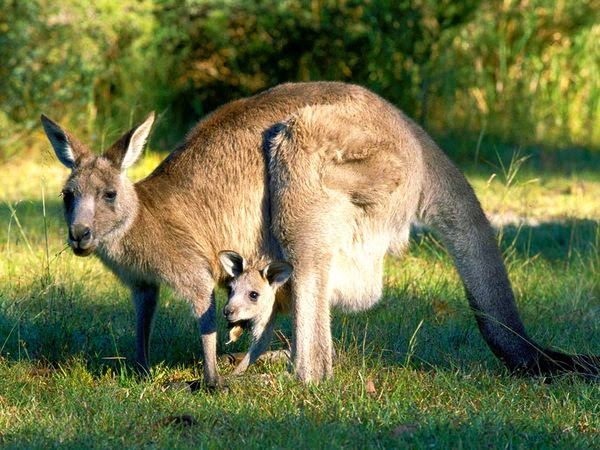
The kangaroo is a marsupial that is indigenous to Australia and and the Indonesian island of New Guinea. Although kangaroos are often seen congregating in groups, kangaroos are generally fairly solitary mammals but kangaroos are also known for being sociable animals when with other kangaroos. Kangaroos have a deep pouch on their front in which to carry their young. A baby kangaroo is called a joey. Kangaroos eat plants, nuts, berries and insects that the kangaroos rummage for in the arid wilderness.


Kangaroos are most well known for their ability to jump a phenomenal distance. The kangaroo is the largest of the marsupials, a group an animals that includes koalas and the common brushtail possum. Marsupials are distinguished by the pouch that these animals have on their bellies, in which they carry their young. There are three main species of kangaroo in existence today and these are the red kangaroo, which is the largest and most well-known of all the kangaroo species.
 
 Kangaroo Credit
 
The Eastern grey kangaroo is known to be the heaviest species of kangaroo despite the fact that the red kangaroo is taller. The western grey kangaroo can be found in large numbers and can be anywhere in colour from grey to brown. The kangaroo is the national animal and emblem of Australia. Kangaroos have large, flat feet which the kangaroos use in order to aid their movement which the kangaroos do by hopping.


Despite the fact that kangaroos do not move about in the conventional way, kangaroos can often be seen running at high speeds, generally when the kangaroo is scared or being chased by oncoming predators. Although kangaroos are not commercially farmed, wild kangaroos are often pursued by human hunters for sport, meat, fur and when farmers are conserving their grazing land for their sheep and cows. This method of sustainable hunting is said to have more health and environmental benefits than that of sheep and cattle. Source
Read More
// // Leave a Comment

Kowari


Kowari also known as the Brush-tailed Marsupial Rat, Kayer Rat, Byrne's Crest-tailed Marsupial Rat, Bushy-tailed Marsupial Rat and Kawiri, is a small carnivorous marsupial native to the dry grasslands and deserts of central Australia. It is monotypical of its genus.  The Kowari is a ground dwelling carnivorous marsupial, living either in its own dug burrow or in the hole of another mammal.


Sexual maturity in a Kowari is reached in the first year of life but breeding seldom takes place until the second year between May and December. The female Kowari (who may produce 2 litters per season) carries up to six young on her teats for about eight weeks and suckles them in a nest (of soft materials) for a further eight weeks. Young Kowaris may ride on their mothers side or back (2-3 months old). The young become independant 100 days after birth.


The Kowari is well adapted to life in the central desert and does not need to drink, as it derieves needed moisture from its food. When cold and food supply is scarce, the Kowari may become torpid (a form of hibernation). By day, it sleeps in a burrow (sometimes can be seen "Sunbaking"), and at night it is a fierce predator on insects, the larger arthropods, and small vertebrates (eg birds, rodents, lizards) The Kowari can stalk like a cat and uses a direct neck bite when killing large prey.


Its range seems to have contracted considerably in recent decades but it is not clear whether this is an indication of its impending endangerment or of cyclical changes in the density of an opportunistic species, self regulating its numbers to survive in a harsh enviroment. So at this stage its Status is listed as Vulnerable Distribution: 100,000-300,000 square kilometers. Source
Read More

Contact Form

Name

Email *

Message *